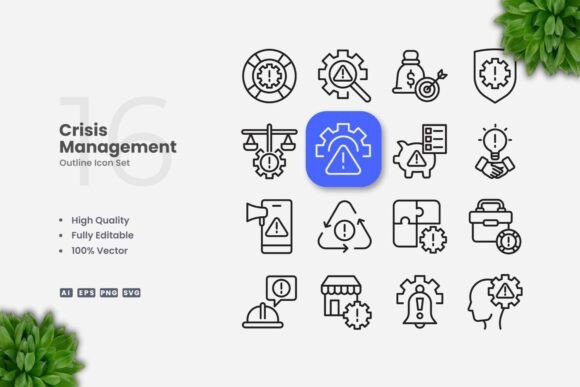
Crisis Management Outline Icons
As a designer who’s spent years working with machine embroidery designs, I always approach new icons with a critical eye. Crisis Management Outline Icons caught my attention for their simplicity and versatility, but I wanted to see how they’d hold up in real projects. After testing them on various fabrics and applications, I’ve gained a clearer understanding of what they can and cannot do.
First Impressions: Clean, Functional, and Adaptable
The first thing that stands out about Crisis Management Outline Icons is their clean, minimalist aesthetic. The design is uncluttered, which makes it ideal for a wide range of applications. Whether you're working on a custom apparel piece or a digital mockup, the clarity of these icons ensures they remain legible and professional-looking.
The layout is well-balanced, with consistent stroke weight and clear visual hierarchy. This makes them suitable for both large-scale embroidery projects, like tote bags, and smaller items such as baby onesies or embroidered patches. The theme is straightforward—perfect for anything related to emergency preparedness, organizational tools, or safety signage.
These icons feel like they were designed with practicality in mind. They don’t have unnecessary embellishments or overly complex shapes, which means they’re easy to adapt for different color schemes or fabric types.
Real-World Embroidery Performance
I tested Crisis Management Outline Icons on several types of fabric, including cotton, polyester, and denim. On most standard materials, the design stitched out cleanly with minimal issues. The stroke weight is just right for most embroidery machines, and the overall stitch density doesn’t cause puckering or distortion.
For custom apparel, like sweatshirts or t-shirts, these icons work well as a decorative element. They add a professional touch without overwhelming the garment. When used on a tote bag design, the icons stood out clearly against the background, making them ideal for small business merchandise or Etsy listings.
On baby clothes, the design was subtle enough not to be distracting but still recognizable. For holiday gifts or personalized products, the clean look makes them versatile for different occasions. They also work well as part of a larger embroidery project, such as an apron or pillow cover.
Where to Use With Caution
While Crisis Management Outline Icons are generally reliable, there are some situations where care is needed. On small hoop sizes, the design might require scaling down, which could affect detail clarity. If you're working with textured fabrics, like linen or canvas, the stroke might not show up as sharply as on smooth materials.
Thin or stretchy fabrics can also be a challenge. These icons rely on consistent stitching, and if the fabric shifts during the process, the final result may look uneven. Dark fabrics may require a contrasting thread color to ensure visibility, especially if the design is meant to be seen from a distance.
Curved surfaces, like caps or hats, can be tricky. The outline style works best on flat areas, so if you're planning to use these on a cap, consider how the curve will affect the overall appearance. Similarly, if the design includes intricate corners or tiny details, those might get lost in dense stitch areas or when using certain stitch types like satin stitch.
Impact on Visual Appeal and Customer Perception
When it comes to visual appeal, Crisis Management Outline Icons add a polished look to any finished product. Their simplicity allows them to blend seamlessly into a variety of styles, whether modern, rustic, or traditional. This versatility makes them a strong choice for handmade products or commercial embroidery projects.
In terms of customer trust, a clean, well-executed design can make a big difference. Customers often associate quality with attention to detail, and these icons deliver that without being overcomplicated. For small shop products or Etsy listings, this level of professionalism can help set your work apart from competitors.
From a branding perspective, these icons are useful for maintaining consistency across different mediums. Whether you're creating printable mockups or digital product previews, the design remains recognizable and cohesive. This is especially helpful for craft businesses that need to maintain a unified visual identity.
Practical Designer Notes
Before committing to a project, I always recommend testing any embroidery file on scrap fabric. This helps identify potential issues with stitch density, stabilizer needs, or thread color contrast. For Crisis Management Outline Icons, I found that using a medium-weight stabilizer helped keep the fabric stable during stitching.
Check the design in black and white mockups to see how it looks on different backgrounds. This is especially important if you plan to use the design on both light and dark fabrics. Also, review the file’s dimensions to ensure it fits your hoop size and machine capabilities.
If you’re planning to sell finished items or digital products, confirm the licensing terms before proceeding. While the product description mentions resizing and color changes, specific file formats or machine compatibility aren’t listed, so it’s best to verify those details directly with the seller.
Overall, Crisis Management Outline Icons are a solid choice for designers looking for simple, adaptable graphics. They perform well in most embroidery scenarios and offer a professional look that can enhance a wide range of handmade or commercial projects.